Aberdeen University Research Links Global Warming to Long-Lasting Wildfire Increases
New study reveals ecosystems take longer to recover from fires triggered by warming events, with implications for current climate change.
By Alasdair Buchan
••2 min read
AI
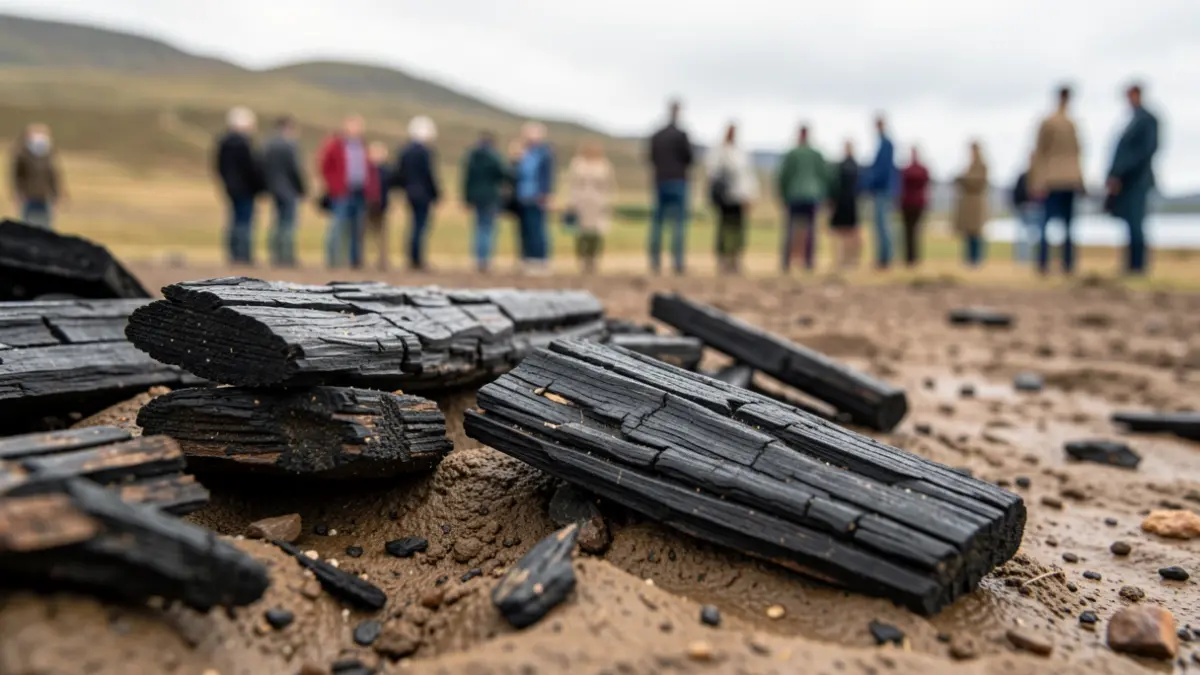
Generic image of fossilised charcoal fragments in sediment, with a blurred Scottish landscape in the background.
Researchers at the University of Aberdeen have discovered that periods of global warming can lead to prolonged increases in wildfire activity, with ecosystems requiring significantly longer recovery times than previously understood.
The study, published in Nature’s Scientific Reports, offers the first detailed evidence of how wildfires responded to a major natural warming event, the Danian hyperthermal, approximately 65 million years ago. This research provides crucial insights into the escalating risks of more frequent and severe fires driven by current climate change.
By analysing fossil charcoal preserved in ancient lake sediments, the team reconstructed wildfire activity during this significant climate change period. Their findings indicate that wildfires intensified in multiple stages and persisted even after temperatures began to stabilise.
The results suggest that established wildfire activity can endure for extended durations due to shifts in vegetation and available fuel, rather than solely climate factors. This persistence highlights the complex interplay between climate and ecosystem resilience.
“
"Wildfires are becoming more frequent and severe across many parts of the world. By studying a similar warming event from Earth's past, we've found that ecosystems can take much longer to recover from fire than previously thought."
“
"What's particularly concerning is that wildfire activity remained high even after the climate began to recover. This suggests that the effects of climate change on wildfire risk may continue long into the future, even if temperatures stabilise."
“
"Our findings provide new evidence that wildfire and ecosystem recovery can be shaped by long-lasting environmental changes. While the Danian hyperthermal occurred naturally, this study highlights the potential challenges facing modern ecosystems as human-driven climate change intensifies."
The research team aims for their findings to enhance the understanding of landscape responses to climate change, aiding efforts to mitigate wildfire risks and support ecological recovery.