Bumblebees Have a 'Sweet Spot' for Salt, Aberdeen University Research Finds
New study reveals bumblebees prefer a specific level of sodium in their diet, exceeding typical nectar concentrations.
By Kirsty Lennox
••2 min read
AI
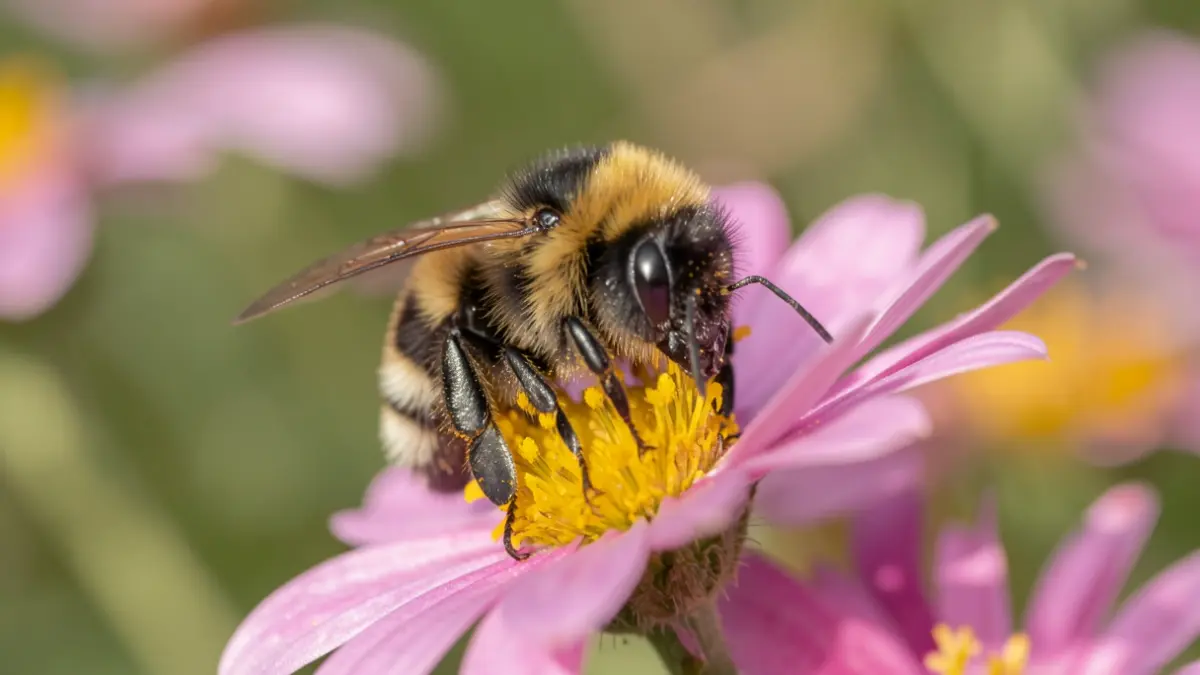
Generic image of a bumblebee on a flower.
Researchers at the University of Aberdeen have discovered that bumblebees have a specific preference for salt, with a 'sweet spot' for sodium that exceeds levels typically found in flower nectar.
Minerals are essential for the health of bumblebees, but excessive amounts can be detrimental. In a new study published in Royal Society Open Science, scientists investigated how buff-tailed bumblebees (Bombus terrestris) reacted to varying concentrations of calcium, potassium, magnesium, and sodium in artificial nectar. While the bees avoided high levels of all four minerals, they demonstrated a clear preference for an intermediate concentration of sodium.
This preferred sodium level is higher than what is typically present in flower nectar, suggesting that nectar alone might not provide as much of this crucial nutrient as bumblebees actively seek. This behaviour indicates that, much like humans, bees may have a taste for salty treats.
“
"Observations of bumblebees and other insect pollinators apparently seeking salt from extra-floral sources such as brackish water pools, bricks and other home building materials, and even mammalian sweat have long attracted scientific curiosity."
Dr Tegan Gaetano, who led the study, explained that this research helps to better understand salt-seeking behaviour in nature and offers a foundation for comprehending how bumblebees respond to mineral nutrients more broadly.
“
"Any cook knows that a pinch of salt improves the flavour of sweets. Bumblebees seem to agree and prefer just the right amount. Why more plants don’t add it to their nectar is still an open question."
Professor Lesley Lancaster, who co-supervised the research, added that bumblebees' preference for salt mirrors human culinary habits. She noted that the reason more plants do not include salt in their nectar remains an unanswered question.
“
"Bumblebees and other pollinators make a huge contribution to our everyday lives. From pollinating many of the foods we eat to supporting healthy ecosystems globally, they are an essential part of a thriving environment. That's why understanding their responses to nutrients and consequently, what they need to stay healthy, is so important."
Dr Gaetano emphasised the significant role of bumblebees and other pollinators in human life and global ecosystems, highlighting the importance of understanding their nutritional needs for their health and survival.