Historic Environment Scotland highlights critical shortages in traditional crafts and specialist knowledge, impacting growth and sustainability.
By Kirsty Lennox
••3 min read
AI
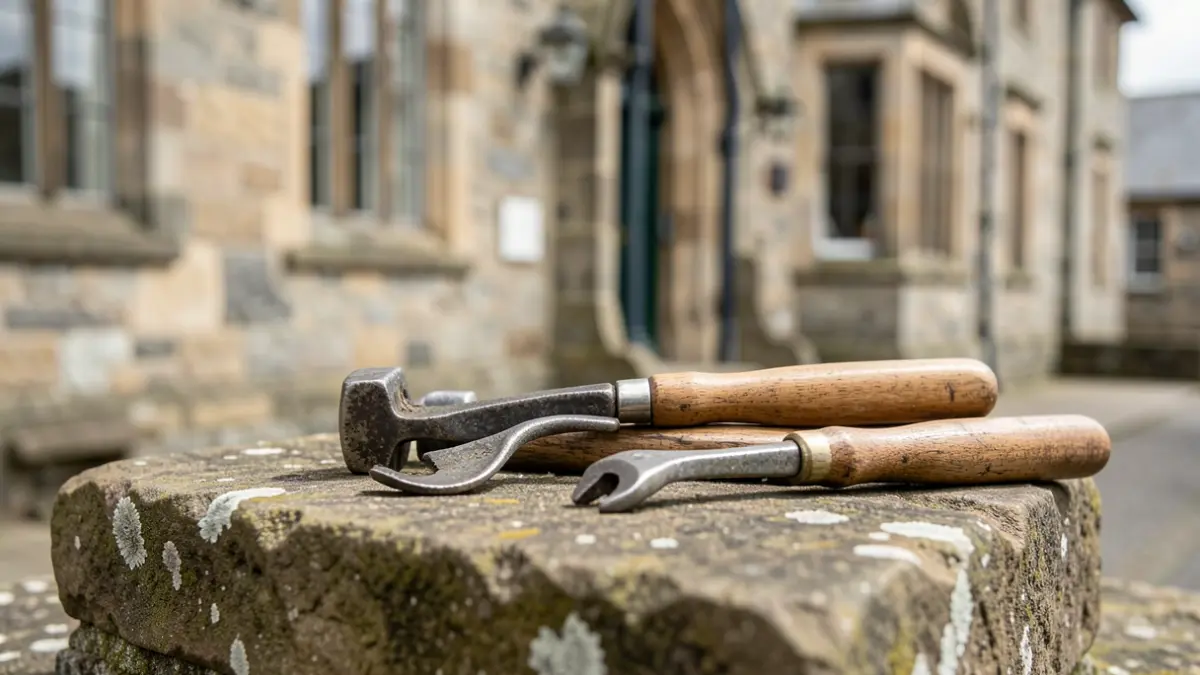
Close-up of stone carving tools on a stone block, with a blurred historic Scottish building in the background.
Historic Environment Scotland (HES) has revealed that nearly 80% of employers in Scotland's historic environment sector are experiencing skills or knowledge gaps, particularly in traditional crafts.
A recent survey by Historic Environment Scotland (HES) has found that 79% of employers in the nation's heritage sector report significant skills or knowledge gaps. The most common deficit identified was in traditional and specialist skills, affecting over half of the organisations surveyed (54%). Furthermore, 58% of respondents noted issues with training provision, and 49% stated that clear and accessible career pathways into the sector are lacking.
The implications of these skills shortages are considerable, with nearly two-thirds of employers anticipating a substantial impact on organisational growth (40%) or sustainability (25%). Key drivers for future workforce challenges include a lack of skilled professionals (77%) and an ageing workforce (67%).
These traditional and specialist skills are vital not only for maintaining Scotland's iconic historic sites but also for the everyday upkeep of buildings where people live, work, and learn. Appropriate repairs are essential to keep traditional structures wind and watertight, ensuring their continued use by communities. Alongside traditional crafts, expertise in heritage science, digital technology, and innovation is also crucial for understanding and conserving Scotland's historic environment.
HES is drawing attention to these findings during Heritage Careers Week (5-9 October), an initiative designed to raise awareness of the diverse career opportunities within the historic environment and the various routes to enter the sector. HES actively supports apprenticeships, work-based learning, short courses, and specialist training.
This year also marks the 30th anniversary of HES's Craft Fellowship programme. Since 1996, the programme has supported over 60 individuals in developing specialist skills in crafts such as stone carving, blacksmithing, stained glass, and thatching, providing hands-on experience with external organisations and skilled practitioners.
“
"Scotland needs traditional and specialist skills to care for the buildings and places that are part of everyday life across the country. When almost eight in ten employers responding to our survey report skills or knowledge gaps, it is clear we need to focus now to strengthen the workforce for the future."
“
"Employers are telling us they need clearer career pathways, accessible training and opportunities for people to learn from experienced professionals. The response to that has to be a collective and cohesive one. HES, industry, employers, training providers and government all have a role to play in creating opportunities for people to enter these careers, develop their expertise and pass specialist knowledge from one generation to the next."
“
"Thirty years of our Craft Fellowship programme shows what sustained investment in people can achieve. We need to build on approaches like this, along with apprenticeships and other training pathways, to ensure Scotland has the skilled workforce it needs to care for its historic environment for decades to come."
The research is part of the Skills Investment Plan for Scotland’s Historic Environment, a collaborative effort to enhance training and career pathways and cultivate the specialist workforce required for the future.
Heritage Careers Week, held annually in October, is led by employers to promote the wide array of careers in the historic environment. It features engaging activities for families and schools, often in partnership with Developing the Young Workforce (DYW) regional groups and local schools, aiming to inspire consideration of heritage careers and improve sector diversity.
Historic Environment Scotland (HES) is the lead body for Scotland's historic environment, a charity focused on heritage, culture, education, and environmental protection. HES researches the historic environment, addresses climate change impacts, and cares for over 300 properties of national importance.