
The study, a collaboration with partners including the Scotland Food & Drink Partnership’s Net Zero Programme and the Scottish Wholesale Association, calls for a unified strategy involving businesses, government, financial institutions, and industry bodies. It specifically examines the food cold chain, crucial for maintaining produce freshness from farm to table.
Professor Bing Xu, Director of the Centre for Financing a Sustainable Future at Heriot-Watt University’s Edinburgh Business School, stated that upgrading refrigeration, essential for keeping produce cold, often demands significant upfront investment. This can strain cash flow for SMEs, especially amidst competing financial priorities in the current economic climate. Professor Xu noted a mismatch between available funding and SME investment needs, making decarbonisation commercially challenging.
SMEs constitute approximately 95% of Scotland’s food and drink sector. The report emphasises that achieving net zero requires more than just technological innovation and finance; businesses must also improve energy efficiency, reduce waste, and embed sustainability into their operations. High upfront costs, uncertain returns, and competing priorities remain significant barriers to investment, with accessing suitable finance and developing internal capabilities posing further challenges for smaller firms.
Recommendations include grants and low-cost finance tailored for SMEs, with industry bodies potentially applying for funding on behalf of groups of firms. Simon McKeating, Partnerships Manager for the Scotland Food & Drink Partnership Net Zero Commitment Programme, highlighted that financial constraints are the primary barrier for the sector, particularly in rural and island communities. He stressed the need for evidence-based solutions from businesses to simplify funding routes and provide trusted advice.
The research, part of the Zero-Emission Cold-Chain (ZECC) project funded by the Engineering and Physical Sciences Research Council (EPSRC), involved workshops and interviews with Scottish food producers and wholesalers. Ylva Haglund, Head of Sustainability & Communications at the Scottish Wholesale Association, echoed these findings, stating that wholesalers are keen to invest in decarbonisation but face significant barriers from upfront costs and commercial pressures. She called for practical financial support and a policy environment that fosters investment in a resilient food supply chain.
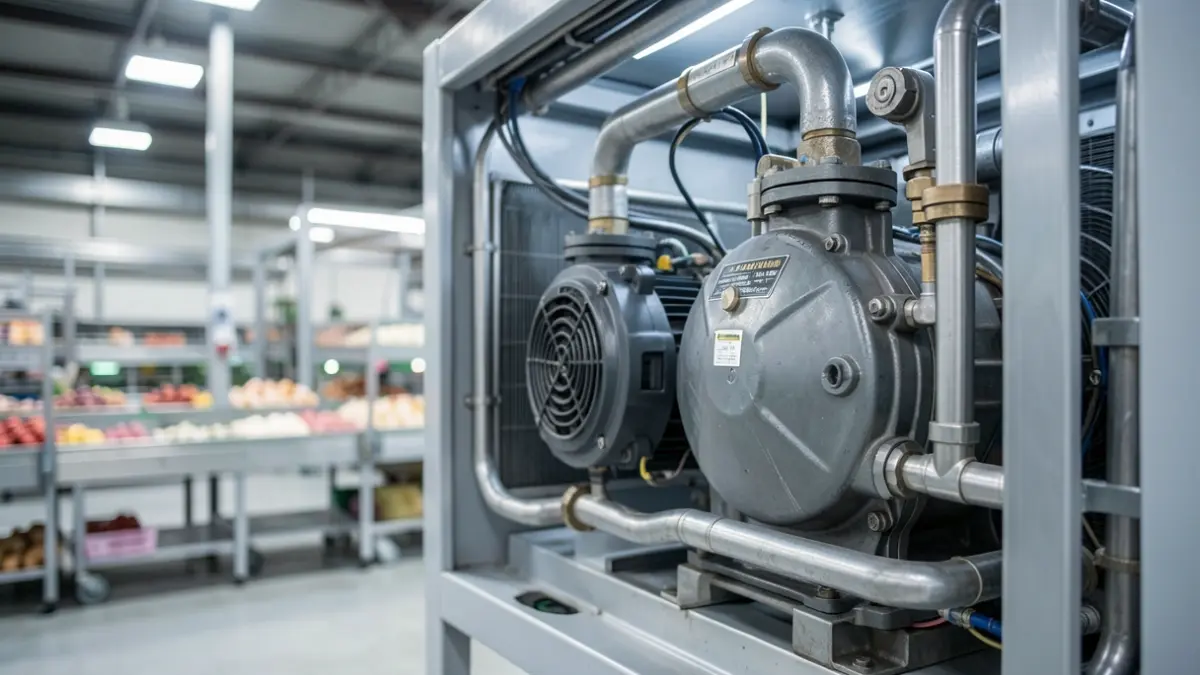
The report clarifies that most cold chain emissions stem from the energy used by compressors and chillers, rather than refrigerant leaks. Firms often invest in low-carbon refrigeration only when it offers additional benefits like lower costs or compliance. The study also advocates for public money to de-risk early investments and attract private capital, suggesting industry bodies create shared platforms for training, data, and best practices. For immediate action, the report advises starting with energy efficiency and waste reduction to fund further upgrades.