Scotland to expand clinical trials with remote technology from 2027
New initiative brings medical research to patients' homes and local surgeries to improve access.
By Kirsty Lennox
••2 min read
AI
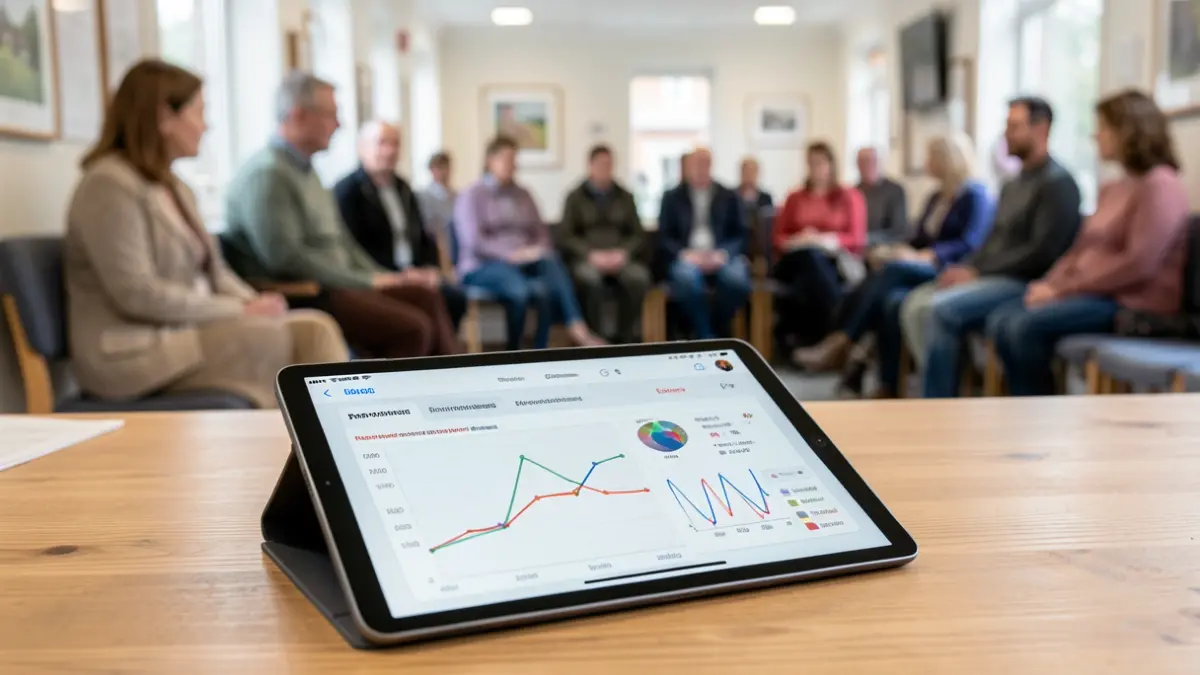
Generic image of a digital tablet displaying medical data on a desk in a healthcare setting.
Patients in Scotland will gain access to clinical trials closer to home and within their own residences starting in 2027, under a new initiative designed to remove geographical barriers to medical research participation.
Key points
Trials begin in 2027 using remote technology
Conducted in GP surgeries, pharmacies and patients' homes
Led by University of Glasgow, University of Dundee and NHS Greater Glasgow and Clyde
The new approach aims to make clinical trials more accessible and diverse by taking research into cures and treatments directly to patients, rather than requiring them to travel, often to the Central Belt, to participate. The initial focus of the initiative will be research into weight management, obesity and cardiovascular disease.
The trials will be carried out by the University of Glasgow, the University of Dundee and NHS Greater Glasgow and Clyde. NHS Tayside will be responsible for coordination, including identifying potentially eligible patients. The project is funded through the Voluntary Scheme for Branded Medicines Pricing, Access and Growth (VPAG) Investment Programme and is supported by the Scottish Government, NHS Scotland and AstraZeneca.
“
"This approach is game-changing, taking trials to patients will help to remove some of the barriers that exist and improve access. This is a fantastic example of how our plans for NHS reform will improve services for people across the country."
Health Secretary Angela Constance highlighted that Scotland already uses technology in other NHS services, from video consultations to wearable sensors that monitor patients safely at home. She stated that using this technology to support clinical trials will benefit both patients and the NHS.
“
"This approach demonstrates a new model for clinical research, using national data, digital infrastructure and strong collaboration across NHS, academia, and industry. This not only supports more inclusive clinical research by reaching historically underserved communities, but it also accelerates our ability to deliver true precision population health on a national level."
Professor Dame Anna Dominiczak, the Scottish Government’s Chief Health Scientist, described the initiative as a new model for clinical research. She noted that it uses national data, digital infrastructure and strong collaboration across the NHS, academia and industry to support more inclusive research and reach historically underserved communities.
“
"This is an important opportunity for Scotland to build on its leading role in the UK’s commercial clinical trial recovery and help shape the next generation of trial delivery. AstraZeneca is proud to partner in this initiative, bringing research closer to patients to widen participation, improve access for underserved communities and help accelerate the development of potentially life-saving treatments."