Native Oysters Born in Dornoch Firth After Century-Long Absence
Heriot-Watt University scientists confirm successful reproduction of native oysters, marking a significant milestone for the Dornoch Environmental Enhancement Project.
By Kirsty Lennox
••3 min read
AI
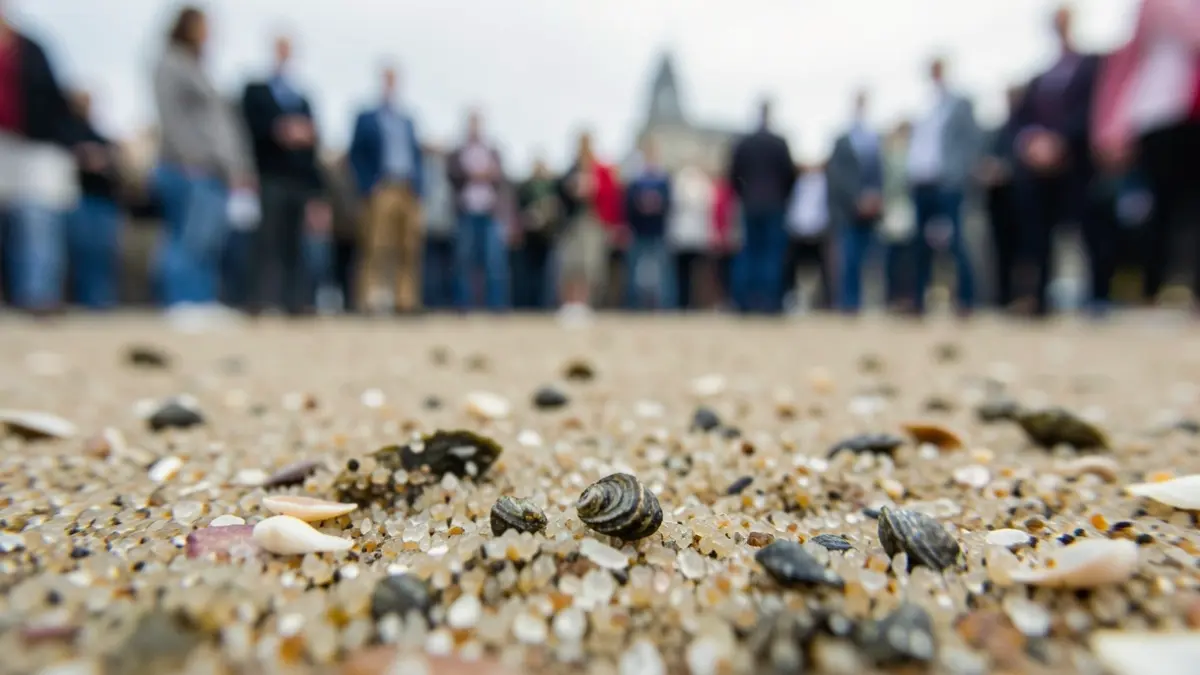
Generic image of tiny oyster spat on a sandy seabed.
Native oysters have been born in the Dornoch Firth for the first time in over a century, scientists from Heriot-Watt University have reported, marking a significant milestone for the Dornoch Environmental Enhancement Project (DEEP).
The discovery of oyster spat, measuring only a few millimeters, was made by Heriot-Watt University scientists at their field laboratory in Dornoch. Expert invertebrate curators at National Museums Scotland and Amgueddfa Cymru – Museum Wales verified images of the tiny young oysters.
A subsequent visit confirmed that some of the baby oysters had grown to the size of a 50p piece, indicating successful reproduction of the Dornoch Firth oyster population. This achievement is a culmination of over 12 years of work and the release of more than 140,000 oysters.
The DEEP project, a collaboration between The Glenmorangie Company, Heriot-Watt University, and the Marine Conservation Society, aims to restore the extinct oyster reef in the Dornoch Firth. Native oysters were likely fished to extinction in the late 1800s.
Since 2017, the project has involved placing oysters from Loch Ryan onto the seabed and releasing over 140,000 specially-bred juvenile oysters into the firth. Volunteers and scientists have been instrumental in this effort.
“
"This is a moment over 12 years and 140,000 oysters in the making. We knew we had about 3000 oysters reaching maturity across the two beds we’ve established, which meant the possibility of spat was higher."
“
"Sea conditions were warm in 2025, and this year in particular. So we have been extra vigilant and hopeful that this could be the year when we saw them. It’s brilliant. Wild oyster populations have collapsed throughout Europe, so finding baby oysters now is proof that targeted restoration can work."
Professor Bill Sanderson added that the DEEP project, initiated 12 years ago, was among the first Native European oyster restoration projects. The team aims to reach around four million oysters by 2031 and is seeking additional funding.
“
"At Glenmorangie, we aim not just to protect our beautiful Highland world, but to enhance it for future generations. Rather like whisky, restoration takes time. Nature has started to take over, and this fledgling reef is on its way to becoming a fully biodiverse, self-sustaining ecosystem. This is a very proud moment for all of us."
“
"We are so excited that oysters in the Dornoch Firth have successfully reproduced. This historic milestone shows what is possible and will help inform our oyster regeneration projects across the UK. The breeding success wouldn’t have been possible without the help of hundreds of volunteers who supported the DEEP scientists. Their dedication has been vital to restoring these long-lost oyster beds, which not only provide habitat for other species but also help capture carbon and improve water quality."
The DEEP project recently received recognition, winning the Water Awareness and Conservation category at the National Sustainability Awards 2026. The team will continue monitoring the site to track population growth and biodiversity improvements.