Scotland's Peatlands: Historic Railways Integrated into Nature Restoration
Forestry and Land Scotland programme balances carbon storage and wildlife habitats with industrial heritage preservation.
By Kirsty Lennox
••2 min read
AI
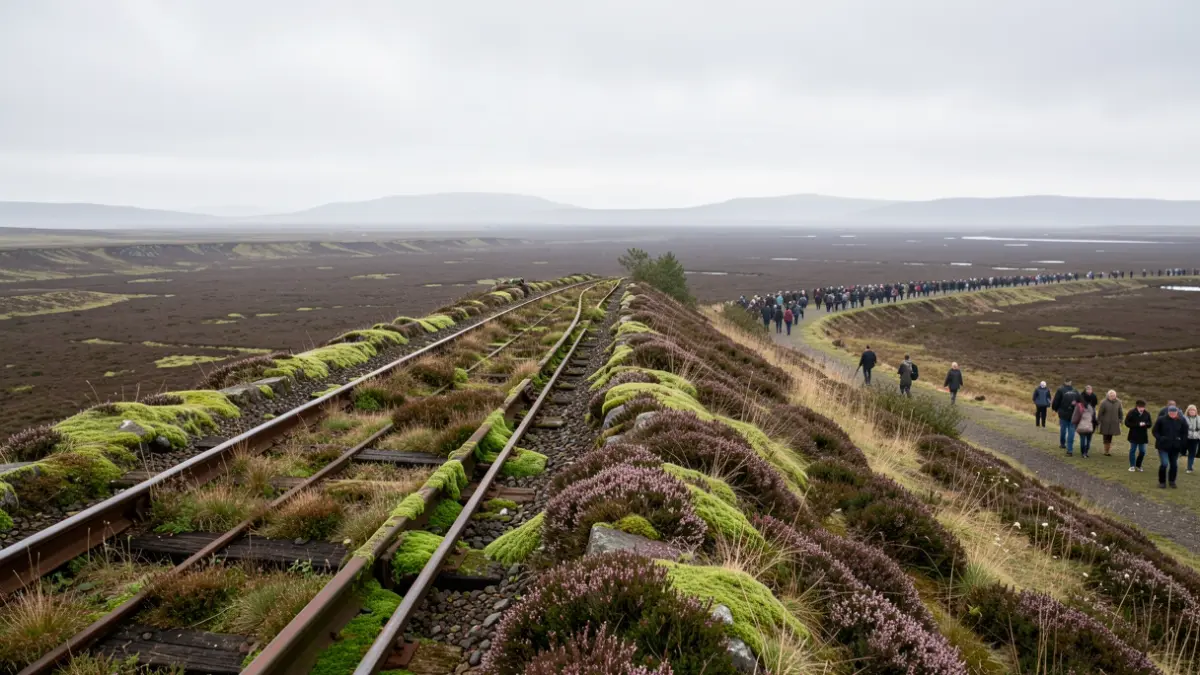
Generic image of an old, moss-covered railway embankment in a misty Scottish peatland.
Forestry and Land Scotland (FLS) is pioneering a peatland restoration approach that integrates historic railway routes, demonstrating how nature recovery can coexist with Scotland's industrial past.
Across several sites in central Scotland, including Flanders Moss, Coalburn Moss, and Heathland Moss, disused railway lines from the Industrial Revolution are being preserved rather than removed. This strategy aims to protect fragile peatland habitats while maintaining a tangible link to the landscape's history.
FLS highlights that while peatland restoration is crucial for carbon storage, biodiversity, and water management, the removal of old railway embankments can sometimes cause greater disturbance to these sensitive environments than leaving them in place. These historic routes once transported slate, coal, and passengers across the country's wetlands.
“
"People often assume that restoring a peatland means returning it to exactly how it looked before human intervention, but restoration is rarely that simple.
In some locations, removing the remains of historic railway lines could damage the peat we're trying to protect. The challenge is finding the best outcome for the habitat while recognising that these landscapes have centuries of human history written into them.
These railways once helped drive Scotland's industrial growth. Today, they sit within landscapes that are recovering their ability to store carbon, support wildlife and manage water naturally. That's a powerful story of change."
Peatlands across Scotland are transitioning from landscapes shaped by drainage, mining, forestry, and industry back into functioning ecosystems. Many former railway routes have also been incorporated into forest road networks, providing access for walkers and cyclists.
“
"Restoration does not mean erasing that history. Instead, the remains of old railway lines can help tell the story of how Scotland's landscapes have evolved, from ancient peatlands to industrial engines of change and now to important nature restoration projects."
FLS's ongoing landscape-scale nature restoration programme, exemplified by sites like Flanders Moss, demonstrates how recovering ecosystems and preserving evidence of the past can be achieved concurrently.