
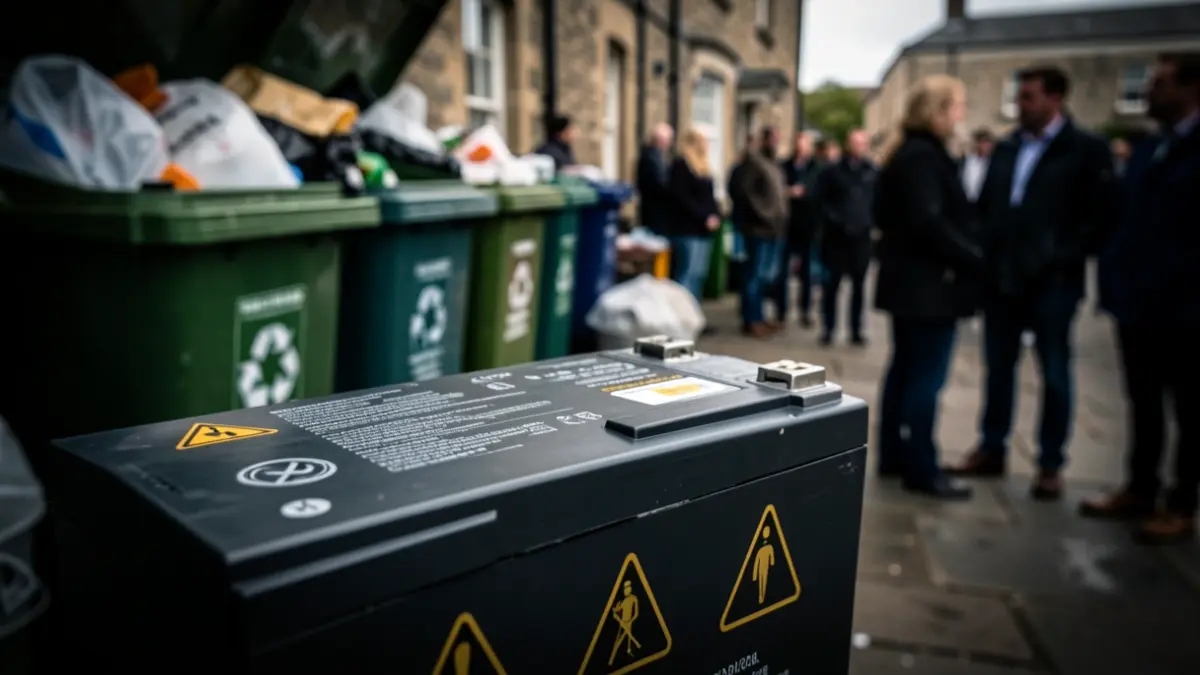
Lithium-ion batteries, commonly found in vapes, mobile phones, tablets, e-bikes, e-scooters, and power tools, can overheat and ignite if damaged, crushed, or disposed of incorrectly. These fires are intense, difficult to extinguish, and pose a significant risk to waste collection crews, recycling facility workers, and local communities.
The National Fire Chiefs Council reported over 1,200 battery fires in UK bin lorries and waste facilities in a single year, a 71% increase compared to 2022. Many of these incidents were caused by batteries and electrical items being placed in household waste or recycling bins instead of being recycled correctly.
To raise awareness, warning messages have been added to the exterior of Stirling Council waste collection vehicles, bringing the campaign directly into communities across the Stirling area.
Residents are urged to follow simple steps to prevent fires and protect people. This includes repairing, donating, or selling working electrical items. Broken or unwanted electricals should be recycled at Household Waste and Recycling Centres. For those in the small electricals, vapes, and batteries kerbside recycling pilot, items can be placed in a plastic bag on top of the recycling bin. Retailer take-back schemes should also be utilised.
Batteries and disposable vapes should be recycled separately at designated collection points or Household Waste Recycling Centres, or returned through retailer take-back schemes. They must never be placed in household rubbish or kerbside recycling bins.
“"Incorrectly disposing of batteries, vapes and electrical items puts waste collection crews, recycling operatives and the wider public at risk, as fires linked to lithium-ion batteries continue to increase across the UK."
Cllr Tollemache added that the campaign encourages residents to take extra care when disposing of these items, highlighting that correct recycling protects people, facilities, and communities from preventable fires while also reducing waste and supporting a more circular economy.
“"It's important people follow the recycling advice by local authorities. Rechargeable batteries containing lithium-ion should never be placed in household general waste as they contain chemicals that can catch fire or explode."
Watch Commander Paterson also advised the public to handle batteries responsibly throughout their lifespan, including buying from reputable retailers and following manufacturer instructions for storage and maintenance. He stressed never to charge or store lithium-ion battery products in bedrooms or hallways.
“"Helping people understand how to safely dispose of electrical items is vital if we’re to tackle increasing numbers of battery fires."
Stuart Murray from Zero Waste Scotland emphasised that this is both an environmental and public safety issue, and that providing residents with the necessary information to recycle properly will protect Stirling’s communities. He noted that repurposing, repairing, donating, or recycling batteries separately can help protect the environment and those who handle discarded goods.
The campaign is supported by the Scottish Fire and Rescue Service and Zero Waste Scotland, working with Stirling Council to raise awareness and encourage safer recycling practices.