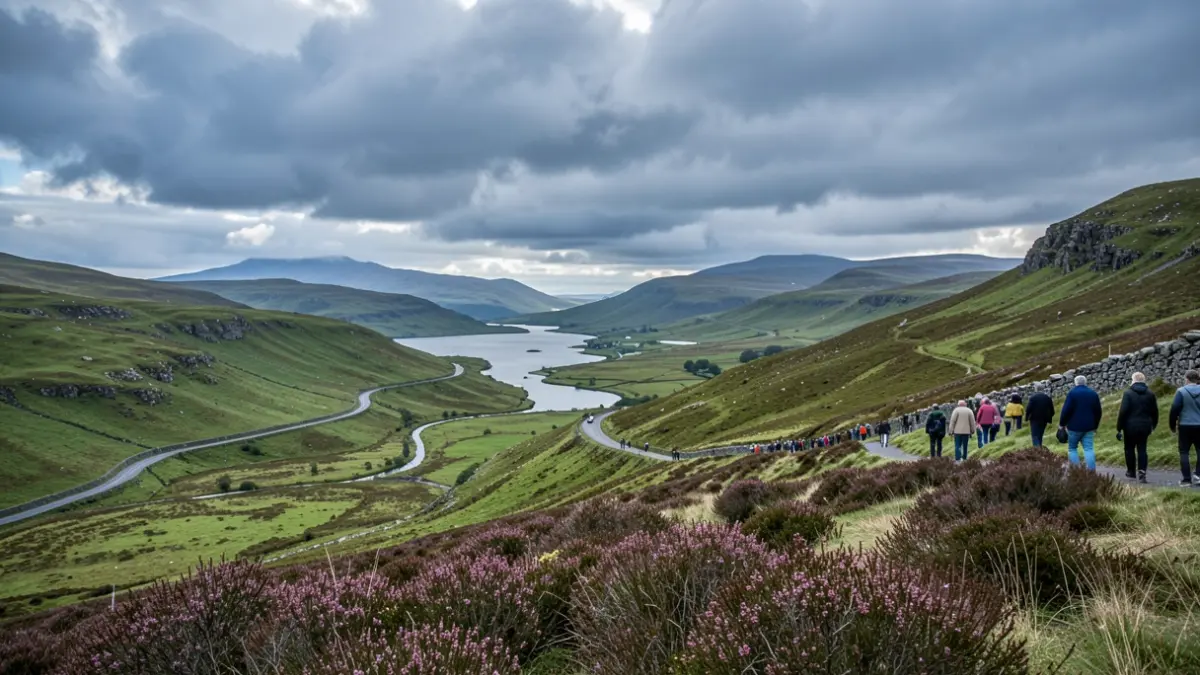
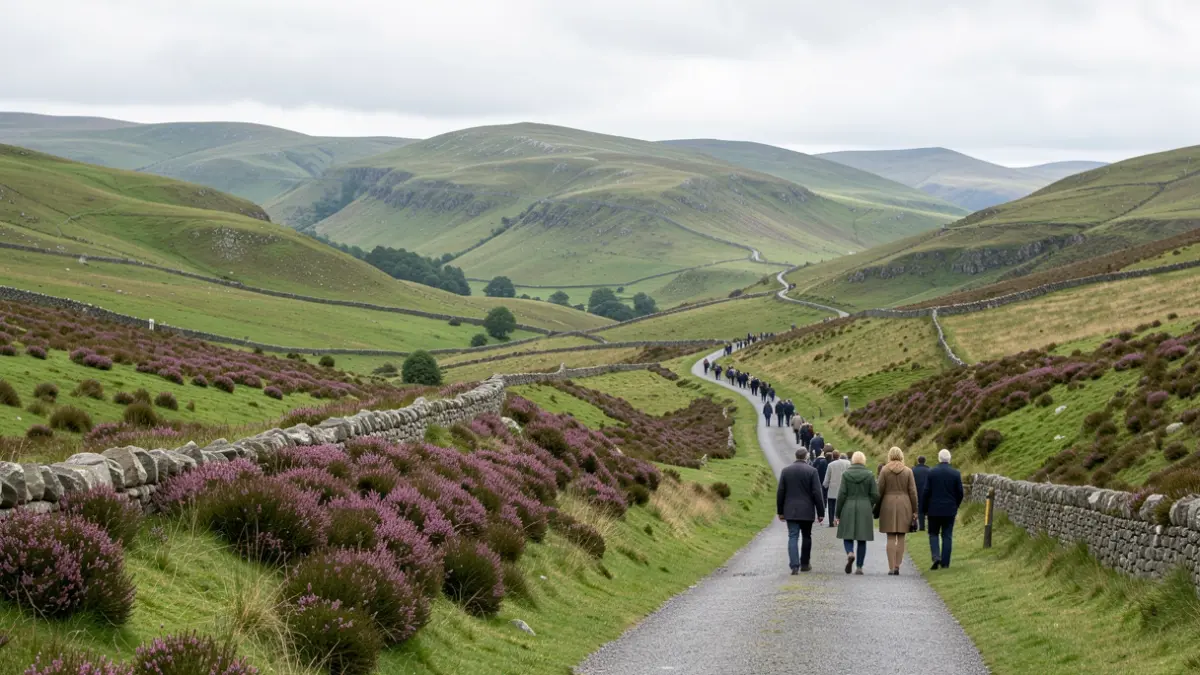
The Loch Lomond & The Trossachs National Park Authority has identified Glen Finglas, Shemore, and Portnellan farms to lead the next phase of its Resilient Farm Network (RFN). This four-year initiative, running from 2026 to 2030, is designed to help agricultural businesses improve their resilience, integrate nature-friendly methods, and foster a long-term transition towards sustainable land use across the National Park.
These three farms will collaborate with specialist advisers and other land managers to trial and refine on-farm techniques that bolster profitability, biodiversity, and soil health. Their participation signifies a significant advancement in creating a National Park-wide network for farmers and land managers to exchange knowledge and experiment with regenerative approaches that benefit both business performance and ecological recovery.
Each participating farm will explore methods best suited to its specific farming system and land. Glen Finglas and Shemore are positioned to demonstrate grazing-led strategies that support habitat restoration. Portnellan, a small family farm with extensive long-term animal data from its organic, grass-fed beef operation, will showcase practical regenerative farming rooted in a strong learning culture.
As part of the programme, the farms will receive bespoke support, including carbon and biodiversity audits, complimentary financial analysis, and annual data-driven performance reviews. The insights gathered will be disseminated across the broader Resilient Farm Network, offering opportunities for land managers throughout the National Park to share and learn from practical, on-farm experiences.
Dominic Hall, Future Nature Portfolio Manager with the Loch Lomond & The Trossachs National Park Authority, stated: “The selected farms represent the diverse farming approaches across the National Park and provide a strong foundation for exploring sustainable, nature-friendly methods to enhance future business resilience. This work is increasingly vital following a summer marked by wildfires and drought across the UK, with farmers and rural businesses seeking clearer, evidence-based strategies to navigate unpredictable conditions. By trialling various land management techniques collaboratively, we can gain a deeper understanding of the practical changes required to help farms manage climate pressures while maintaining profitable, productive operations. The Resilient Farm Network will also act as a pilot for farms and rural communities nationwide, illustrating adaptation and mitigation strategies for the climate crisis.”
Freda Scott-Park, Land Manager and Co-Owner of Portnellan Farm, commented: “Participating in the Resilient Farm Network allows us to build upon our closed herd and long-term animal data, using this history to understand how the farm can adapt and remain resilient in the coming years. A primary focus for us is investigating how our soil structure and grass pastures can be improved to offer grazing resilience and enhanced biodiversity for the future. Through the RFN, we will also test concepts such as small-scale agroforestry, improved surface-water management, and new approaches to shade and shelter, enabling informed decisions that benefit both the herd and the wider landscape.”
The programme aligns with the Scottish Government's evidence-based priorities for climate adaptation in agriculture. It underscores that resilience is best achieved through whole-farm strategies that enhance soil health, strengthen land and livestock management, and leverage natural landscape features, supported by farmer-led knowledge exchange and integrated policy. By adopting resilient, regenerative practices, land managers within the National Park can establish more stable, productive farming systems better equipped to withstand a worsening climate, thereby strengthening the landscapes that sustain local communities and nature long-term.
Agriculture Minister, Jim Fairlie MSP, remarked: “The Resilient Farm Network presents an exciting prospect for crofters and farmers within the National Park to access expertise that will aid them in managing land sustainably over the longer term, while restoring nature and increasing their climate change resilience. The evidence and lessons learned from existing RFN farms, now joined by Glen Finglas, Shemore, and Portnellan, can benefit the wider agricultural sector, a crucial component of rural Scotland and our economy.”
The RFN's methodology also reinforces the National Park Authority's broader landscape-scale initiatives, including the Loch Lomond & The Trossachs Landscape Connections project. This initiative, funded by The National Lottery Heritage Fund and delivered in partnership with RSPB Scotland and Loch Lomond & The Trossachs Countryside Trust, aims to restore and connect rare Scottish woodlands while creating opportunities for local communities and supporting rural economies. Through 'Grazing for Future Nature', part of Landscape Connections, the Authority will collaborate with farms in focus areas to implement and develop conservation-grazing projects supporting woodland restoration, enhancing farmland biodiversity, and strengthening native woodland networks.
Farmers and land managers participating in the RFN will have access to training, peer support, and funding opportunities, including the Scottish Government’s Nature Restoration Fund for projects linked to nature restoration. Further details about the RFN programme can be found on the National Park Authority website, or by completing the Expression of Interest form. For inquiries, contact landmanagement@lochlomond-trossachs.org.