
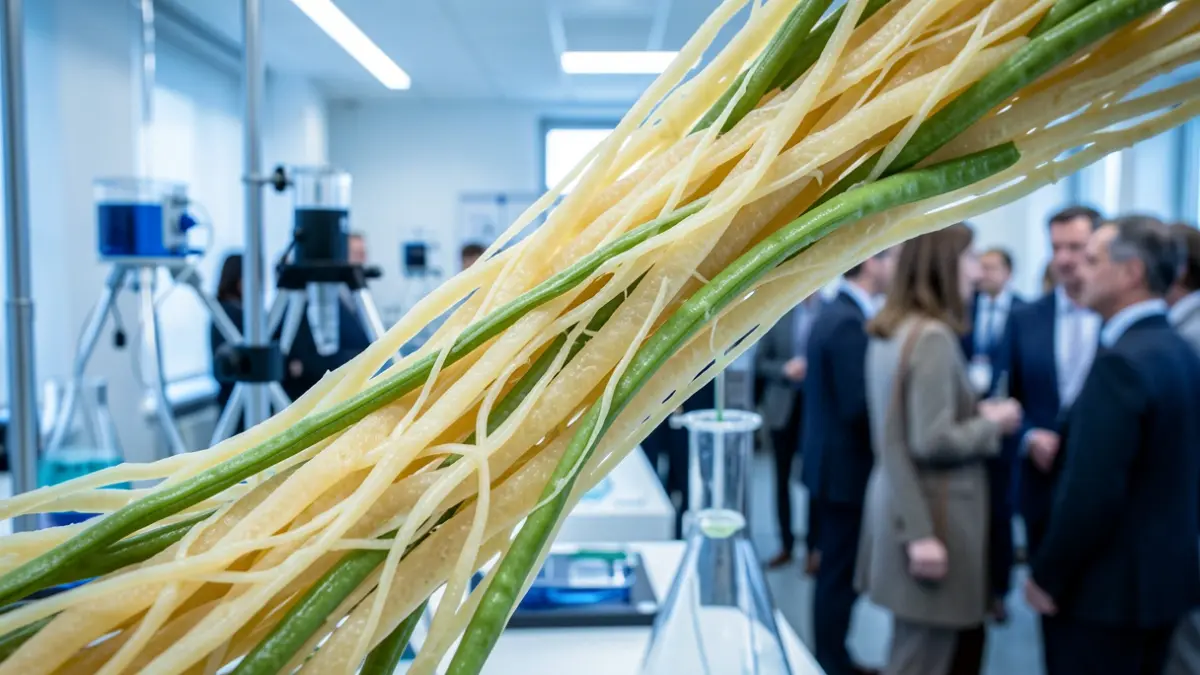
Potatoes may hold the secret to developing more realistic and gluten-free plant-based meat alternatives, according to new research. Scientists have investigated whether potato protein can be combined with fava beans to achieve the firm, fibrous structure characteristic of meat.
Currently, wheat gluten is widely used in vegan and vegetarian meat substitutes for its chewy texture. However, this makes these products unsuitable for individuals with coeliac disease or gluten sensitivity. The research aimed to determine if potato protein could serve as a viable alternative.
The study, published in the journal Food Hydrocolloids, involved combining fava bean protein with either wheat gluten or potato protein. These mixtures were then processed using high-moisture extrusion, a technique that uses heat, pressure, and mechanical force to create meat-like fibrous structures.
A mixture of 75 per cent fava bean protein and 25 per cent potato protein was tested and compared to fava bean protein alone and a wheat gluten mixture. The findings indicated that potato protein formed a particularly strong network with fava bean protein. Dr Parag Archaya from the Bezos Centre for Sustainable Protein at the University of Greenwich noted that while the gluten version was softer, the potato protein version provided the necessary structure for a meat alternative. Fava beans are being increasingly considered for plant protein due to their suitability for cooler climates and high protein content, offering an alternative to soy, pea protein, and wheat gluten.
While the texture was promising, further work is needed on the flavour profile. Professor Stephen Euston, a food scientist at Heriot-Watt’s School of Engineering and Physical Sciences, stated that an electronic taste sensing system detected more bitterness and astringency in the potato protein version, along with a stronger lingering aftertaste. Food companies would need to address this bitterness before widespread consumer use.
The research was supported by funding from the Bezos Earth Fund through the Bezos Centre for Sustainable Protein and the UK Department for Environment, Food & Rural Affairs (Defra).